Facial Palsy Surgery
Solutions to Restore the Aesthetics and Function of Your Eyelids
Facial Paralysis Surgery
Prolonged facial paralysis can significantly alter eyelid position due to loss of muscle tone and atrophy of the muscles surrounding the eyes. This condition affects both the upper eyelid, which may retract, and the lower eyelid, which tends to droop.
How does Facial Paralysis affect the eyelids?
- Retracted upper eyelid:
The orbicularis muscle responsible for closing the eye is affected by facial paralysis, while the levator muscle of the upper eyelid is not. This imbalance causes the upper eyelid to retract, preventing complete eye closure. - Drooping lower eyelid:
Nerve paralysis can cause the lower eyelid to lose muscle tone, leading to excessive drooping or laxity.
Surgical options to correct the effects of Facial Paralysis
Fortunately, there are several surgical options available to correct these issues and restore both the function and aesthetics of the eyelids:
- Lateral tarsal strip procedure:
This technique is indicated for patients with severe lower eyelid laxity due to loss of muscle tone from chronic facial paralysis. The procedure tightens the lower eyelid, improving its position. See the ectropion section for more information. - Midface lift:
In cases where prolonged facial paralysis has affected the entire midface (from the upper lip to the lower eyelid), this procedure repositions sagging facial tissues, correcting issues such as ectropion and improving overall facial aesthetics. - Gold weight implants:
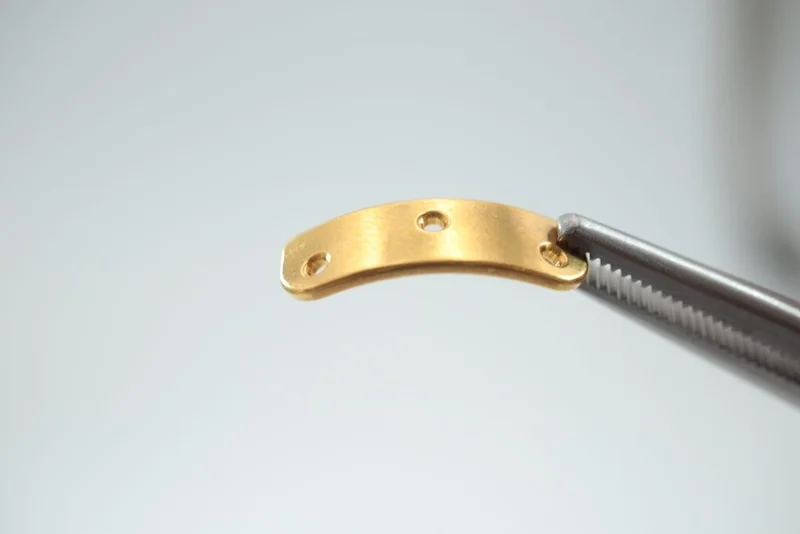
These small implants are placed in the upper eyelid to increase its weight and facilitate closure, helping to relieve dry eye symptoms associated with facial paralysis.
- Brow lift:
In case of a facial palsy, the go-to approach for lifting the droopy eyebrow, is a direct brow lift with an incision just above the brow hairs. See our page on Brow Lifting for details.
Each treatment is personalised and depends on the specific condition of each patient. Treatment options and the plan of action will be discussed in detail during the consultation. With the appropriate surgery, it is possible to restore ocular function, reduce dryness of the eye and improve facial aesthetics and as such, improving the quality of life.
Contact us
Take the next step toward your well-being,
with expert guidance at every stage.