Chalazion
Treatment for Eyelid Lumps
What is a Chalazion?
A chalazion is a benign, painless lump that forms on the eyelid due to blockage of a sebaceous gland known as a Meibomian gland. These glands are essential for producing the oil that keeps our eyes lubricated. A chalazion develops when one of these glands becomes blocked, leading to a buildup of oil and the formation of a cyst. This condition is more common during adolescence and may be associated with conditions such as blepharitis, rosacea, or seborrheic dermatitis. Although most chalazia are harmless, some may be confused with other types of eyelid lumps, such as sebaceous carcinomas, so it is important to consult a specialist for an accurate diagnosis.
Eyelid Lumps
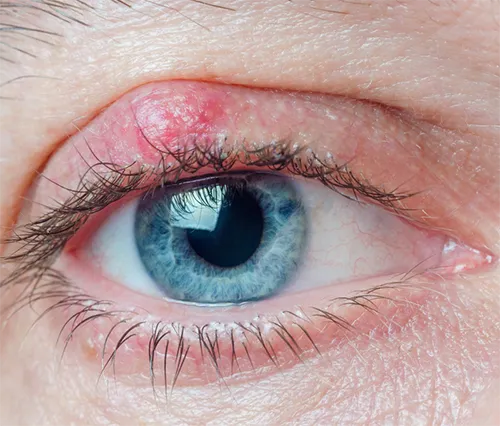
By eyelid lumps, we refer to benign inflammations of the eyelid, such as chalazia (see photo) or styes, which can be quite uncomfortable and painful when inflamed. In adults, cleaning or treating these inflamed glands is usually done under local anaesthesia only. It is a short procedure that lasts just a few minutes, can be performed in the office, and leaves no visible scar, as the incision is almost always made on the inside of the eyelid. An eye patch is placed over the eye for a few hours after the procedure, and an antibiotic ointment is prescribed. Although these inflammations do not usually interfere with vision, some swelling and blurred vision may occur after the procedure due to the antibiotic ointment. These symptoms typically resolve quickly within a few days.
Symptoms of a Chalazion
The most common symptoms of a chalazion include:
- A visible, firm, reddish lump on the eyelid
- Discomfort when blinking or pressure feeling on the eye
- Blurred vision if the chalazion grows large enough or presses on the cornea
- In cases of infection, preseptal cellulitis may develop, requiring antibiotic treatment
Chalazion treatment
Treatment depends on the severity and duration of the chalazion. In many cases, it can be managed with conservative measures such as:
- Warm compresses: Applying heat and gently massaging the affected area helps soften the cyst and release the gland blockage.
- Regular eyelid hygiene: Using a mild baby shampoo to keep the area clean and free of infection.
During this period, it is advisable to avoid eye makeup, as it may irritate or worsen the condition.
Surgical treatment for Chalazion
If the chalazion persists and does not respond to conservative treatment, chalazion surgery is the most effective option. This procedure, performed under local Anaesthesia, involves making a small incision on the inside of the eyelid to drain the cyst contents. The intervention is quick, has a high success rate, and leaves no visible scars since the incision is made on the inner surface of the eyelid.
Type of anaesthesia used for surgery
The procedure can be performed using local anaesthesia only.
Recovery after Chalazion surgery
Recovery after chalazion surgery is fast. While it is normal to experience some swelling or mild bruising during the first few days, these symptoms resolve quickly. An antibiotic ointment is prescribed to prevent infection and promote healing, usually for 5 to 7 days.
Preparation for surgery: what can I so beforehand?
Little preparation needs to be taken, as it is a short, in office intervention but for optimal results, it would be best to cease smoking, if possible several weeks before surgery, as smoking impairs healing.
If you take anticoagulant medication, a higher change of bruise formation is present. However, the minimally invasive nature of the intervention does not need cessation of such medication in most cases.
Frequently Asked Questions about Chalazion
Contact us
Take the next step toward your well-being,
with expert guidance at every stage.