Eyelid Tumour
Specialised Diagnosis and Treatment
What is an Eyelid Tumour?
Eyelid tumours are abnormal growths that can be benign or malignant. They may affect different areas of the eyelid, including the eyelid margin, and require an accurate diagnosis to determine the appropriate treatment.
Types of Eyelid Tumours: benign and malignant
Eyelid tumours are mainly divided into benign and malignant types. Benign tumours are usually less concerning, while malignant tumours require prompt attention to prevent serious complications such as local growth or the spread of cancer.
Treatment for Eyelid Tumours
Treatment varies depending on the type and size of the tumour. In most cases, it is possible to perform a single-stage procedure that includes tumour excision and eyelid reconstruction during the same surgery.
When is a second procedure needed?
If the tumour shows an irregular growth pattern or malignancy is confirmed by biopsy, it may be advisable to perform excision in a first surgery and reconstruction in a second procedure, after pathology confirms that the excision margins are tumour-free. Depending on the case, an intra-operative biopsy may also be performed, meaning the pathologist analyses the tissue immediately so the surgeon can proceed with eyelid reconstruction during the same operation.
Eyelid reconstruction after excision
Eyelid reconstruction is essential to restore both function and aesthetics. For tumours located on the lower eyelid, a conservative approach is often possible, sometimes delaying reconstruction while using lubricating ointments. However, tumours of the upper eyelid usually require more urgent treatment and immediate reconstruction due to the eyelid’s critical protective function for the eye.
Reconstruction options for large defects
Dr. van der Veen uses a variety of reconstructive techniques for large eyelid defects, including:
- Hughes tarso-conjunctival flap
- Cutler–Beard flap
- Tenzel flap
- Mustardé flap
- Free or pedicle skin and muscle flaps
- Free tarso-conjunctival grafts
- Autologous mucosal grafts (conjunctiva or oral mucosa from the patient)
- Allografts (synthetic or donor materials)
- Autologous cartilage grafts (such as ear cartilage)
What to expect after surgery
Depending on the type of reconstruction performed, your eyelid may already be closed and well positioned, or your eye may need to remain closed for a period of time to improve the success rate of the grafts used. Since each case requires a different approach, this will be discussed in detail during your consultation.
Recovery and postoperative care
For general information about pre- and postoperative care, we invite you to consult the Blepharoplasty section. It is important to note that recovery after tumour and reconstructive surgery follows a different course in every case and will be explained to you in detail during consultation.
In most cases, patients can return to their daily activities within a few days, always following our team’s recommendations to ensure optimal recovery.
Preparation for Surgery: What can I do beforehand?
For the best outcome, it is important to rest well and maintain a balanced diet.
If you smoke, it is recommended to stop several weeks before surgery, as smoking impairs healing.
If you take anticoagulant medications, consult the prescribing physician to evaluate the possibility of temporarily stopping them before surgery.
Why choose a specialist surgeon for Eyelid Tumours?
Experience and aesthetic results
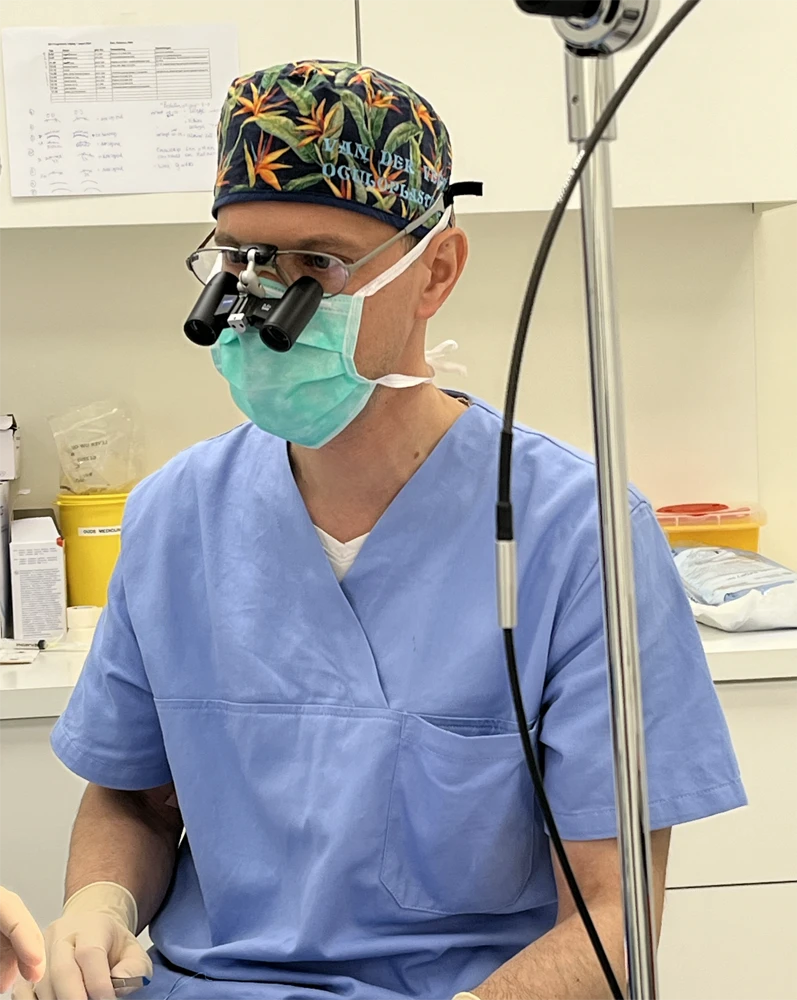
Eyelid tumour treatment should be performed by a surgeon experienced in eyelid surgery, as each tumour type has specific surgical requirements. Ideally, your surgeon should be an ophthalmologist with formal fellowship training in oculoplastic surgery, as is the case in our practice. Experience and training are key to ensuring not only complete tumour removal but also restoration of eyelid function and appearance.
Benefits of early and specialised treatment
Early and specialised treatment ensures complete tumour removal, minimising the risk of recurrence and optimising aesthetic outcomes. A correct surgical approach helps preserve eyelid mobility and its natural appearance.
Contact us
Take the next step toward your well-being,
with expert guidance at every stage.