Eyelid Ptosis – Droopy Eyelid
Surgical Correction for a More Open, Rejuvenated Look
Eyelid ptosis, or drooping of the upper eyelid, is one of the most common concerns for which patients consult Dr. van der Veen. In his clinic, he treats patients with eyelid ptosis on a weekly basis, often because patients have noticed that their eyelid is drooping and are seeking minimally invasive or sutureless techniques to correct this.
Drooping eyelids (ptosis) are also frequently discovered during a consultation for upper eyelid blepharoplasty, as excess skin can conceal the true position of the eyelid margin. Many people do not realize they have a drooping eyelid, as the effect can develop gradually and subtly. In these cases, correcting ptosis at the same time as an upper eyelid blepharoplasty is essential to achieve a satisfactory aesthetic result.
What is Ptosis or a Drooping Eyelid?
Ptosis refers to the drooping of the upper eyelid, which can be caused by weakening or paralysis of the muscle responsible for lifting the eyelid, known as the levator muscle.
This condition can affect one or both upper eyelids. Correcting ptosis often significantly improves the patient’s visual field and reduces the strain on the forehead muscles, which compensate for the low eyelid position. Additionally, it rejuvenates the appearance of the eyes, giving them a brighter, more youthful look.

PRICE
From €1950

DURATION
45 min – 1.5 h

RECOVERY
Approximately 5-7 days
Ptosis Correction
Treatment of ptosis depends largely on its cause.
In most cases, correction involves modifying the levator muscle to reposition the eyelid to its proper height. This is typically done through a small incision in the upper eyelid skin.
For younger patients without excess upper eyelid skin, and when the goal is to avoid visible incisions, the muscle can also be approached via an internal incision inside the eyelid (transconjunctival approach).
In many aesthetic cases, where the droop is only 1–2 mm, correction can be performed without external incisions or visible scars, sometimes even without sutures. This technique prevents friction between sutures and the cornea, reduces surgery time, and eliminates the need for suture removal.
In some cases, ptosis correction is performed as part of an upper eyelid blepharoplasty. For this to be diagnosed and treated correctly, it’s imperative you consult a board certified oculoplastic surgeon as they have the most experience in treating these problems. Addressing these issues simultaneously ensures optimal aesthetic and functional outcomes.

Personalized treatment options
During the consultation, Dr. van der Veen evaluates the severity of the ptosis and discusses the most appropriate treatment options for each patient. The choice of procedure depends on the degree of eyelid drooping and the patient’s functional and aesthetic goals.
Whether performed as a combined procedure with blepharoplasty or as a standalone intervention, the goal is to use the least invasive approach possible, maximizing results while minimizing recovery time and visible scarring.
Results
After ptosis surgery, most patients experience significant improvement in both eyelid function and appearance. The eyelid is restored to a more natural position, which enhances symmetry and gives a more youthful look. In cases of severe drooping, ptosis correction can also improve the visual field. Results are generally long-lasting, and recovery is quick, allowing most patients to resume daily activities within a few days.
Type of anaesthesia
Ptosis surgery is usually performed under local anesthesia, sometimes combined with sedation, allowing the patient to remain awake and cooperate during the procedure. This cooperation helps achieve a more precise and customized eyelid elevation.
In special cases, such as children or patients unable to cooperate, general anaesthesia may be used. The choice of anaesthesia is adapted to each patient´s needs to ensure safety and comfort.
Preoperative recommendations
To optimize results, patients should follow these recommendations before surgery:
Stop anticoagulants: If you take blood-thinning medications, it is essential to suspend them several days before surgery under medical supervision.
Adequate rest: Avoid strenuous activity and sleep with the head slightly elevated during the first week to reduce swelling and hematoma formation.
Healthy diet: Eat a balanced diet and avoid ultra-processed foods. If desired, a consultation with a nutrition specialist can be arranged.
Stop smoking: Patients should stop smoking several weeks prior to surgery, as smoking can interfere with healing and increase complication risks.
Postoperative care
After ptosis surgery, it is important to follow these guidelines for safe and quick recovery:
Rest and avoid physical activity: Refrain from heavy lifting, intense physical activity, or household chores for 5–7 days. Physical strain can increase blood pressure and risk bleeding or hematomas.
Cold compresses: Apply cold compresses to the eyelids for the first 72 hours to reduce swelling and bruising, several minutes every hour.
Antibiotic ointment: Apply prescribed antibiotic ointment twice daily to the surgical site for 7–10 days. For transconjunctival procedures, the ointment may also be applied inside the eyelid.
Recovery
Recovery varies depending on the technique used. Some swelling or bruising is normal, but most patients can resume daily activities after 1 week. In patients with dry eyes, this has to be treated intensively after ptosis correction and downtime also depends on blurry vision from having to use ocular lubrication gels. With the conjunctiva muller muscle resection technique without sutures, postoperative downtime is minimal and daily activities can be resumed almost immediately. Following the surgeon’s postoperative instructions, which can vary from patient to patient, ensures optimal healing and results.
Eyelid ptosis specialist
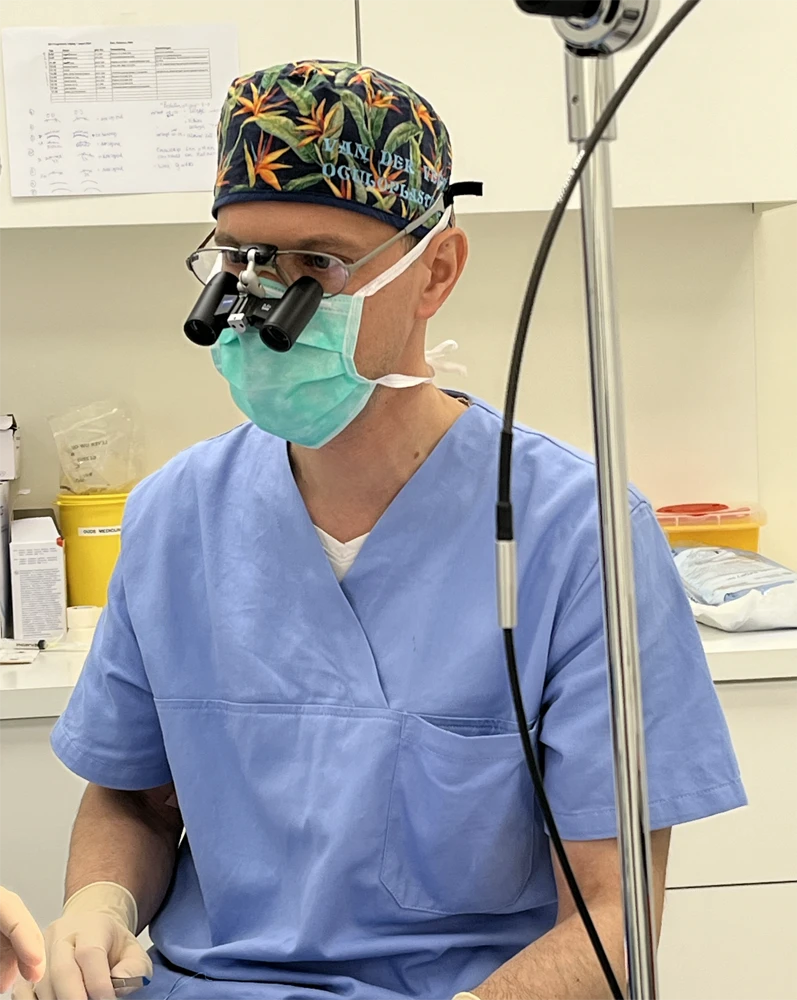
Dr. Rob van der Veen is a renowned oculoplastic surgeon specializing in the treatment of eyelid ptosis. With extensive international experience, Dr. van der Veen provides a personalized approach, selecting the most suitable surgical technique based on each patient’s anatomy and aesthetic goals.
His commitment to excellence and safety ensures optimal results in both eyelid function and appearance. Patients can trust that Dr. van der Veen will provide them with expert care and professional guidance at every step of the surgical process.
Contact us
Take the next step toward your well-being,
with expert guidance at every stage.