Artificial Eye
Aesthetic and Functional Solutions after the Loss of an Eye
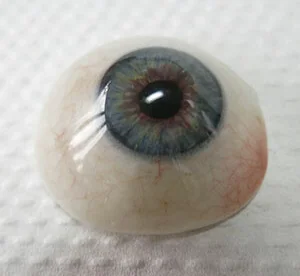
The loss of an eye may result from ocular disease, trauma, or a tumour that affects vision and/or causes pain. After enucleation (removal of the eye) or evisceration (removal of the contents of the eye), the empty space is filled with an orbital implant. An artificial eye is then placed over this implant and customised to the patient’s characteristics, providing both functional and aesthetic results.
How is an Artificial Eye placed?
Today’s advanced technology allows for the creation of extremely realistic ocular prostheses, both in fit and appearance, making them almost indistinguishable from a natural eye.
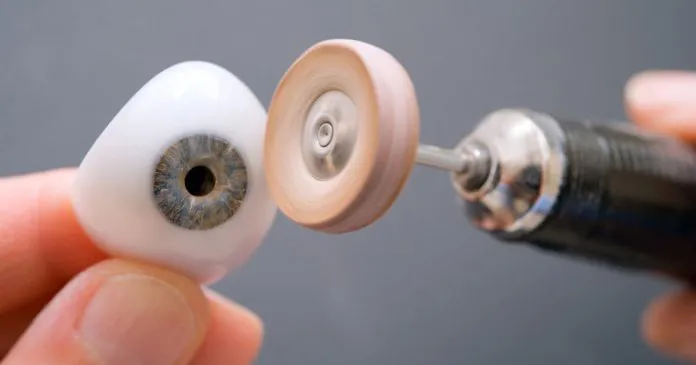
The process of placing an artificial eye consists of two steps. First, a surgical procedure—such as evisceration or enucleation—is performed to remove the damaged tissue, along with placement of an implant to restore the volume lost during the initial stage of surgery. Once you have fully recovered, you will visit an ocularist, who will take precise measurements of the anophthalmic socket and carefully study your remaining eye to match its color and details in your future prosthesis.
Over time however, some patients may develop a hollow groove or empty space in the eyelids due to changes in the tissues around the artificial eye, especially after early surgery or trauma. In cases where simply changing the ocular prosthesis is not sufficient, a surgical intervention can be performed to improve the anophthalmic socket.
Dr. van der Veen has extensive experience in revision surgeries to resolve problems in anophthalmic sockets and to improve the fit of ocular prostheses, based on many years of work as an oculoplastic and orbital surgeon in academic hospitals in the Netherlands and referral centers in Spain.
To achieve the best possible aesthetic and functional outcome for you, we collaborate with some of the best ocular prosthetists in Europe, based both in the Netherlands and Spain.
Artificial Eye revision surgery
Dr. van der Veen has extensive experience performing revision surgeries to address problems in anophthalmic sockets. These include correction of hollow grooves or internal eyelid adjustments to improve the fit of the ocular prosthesis. Although these procedures are often complex, they provide effective solutions to enhance both function and appearance.
Collaboration with Ocular Prosthetics Experts
To ensure the best aesthetic and functional results, we collaborate with some of the leading ocular prosthetists in Europe. In Barcelona, we work with Ocular Lab and ArtLens, two of the most advanced ocular prosthetic laboratories in Europe. In the Netherlands, we collaborate with Frederique Bak, an expert prosthetist who offers highly professional, customised solutions.
More information
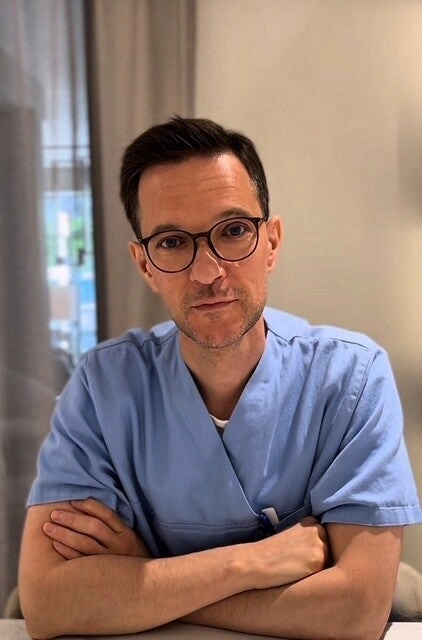
Dr. van der Veen has extensive experience in revision surgeries to address
issues concerning anophthalmic sockets and improve the fit of an ocular prosthesis, drawing on his years of work as an oculoplastic and orbital surgeon in academic hospitals in the Netherlands.
To achieve the best possible functional and aesthetic results for you, we collaborate with some of the top ocular prosthetists in Europe, based in both the Netherlands and Spain.
Contact us
Take the next step toward your well-being,
with expert guidance at every stage.